Podcasters Advise Michigan Candidate on Handling Controversial Questions
Hosts of a popular political podcast discussed Michigan Senate candidate Abdul El-Sayed's approach to questions regarding his family's alleged ties to the Muslim Brotherhood.
Media·
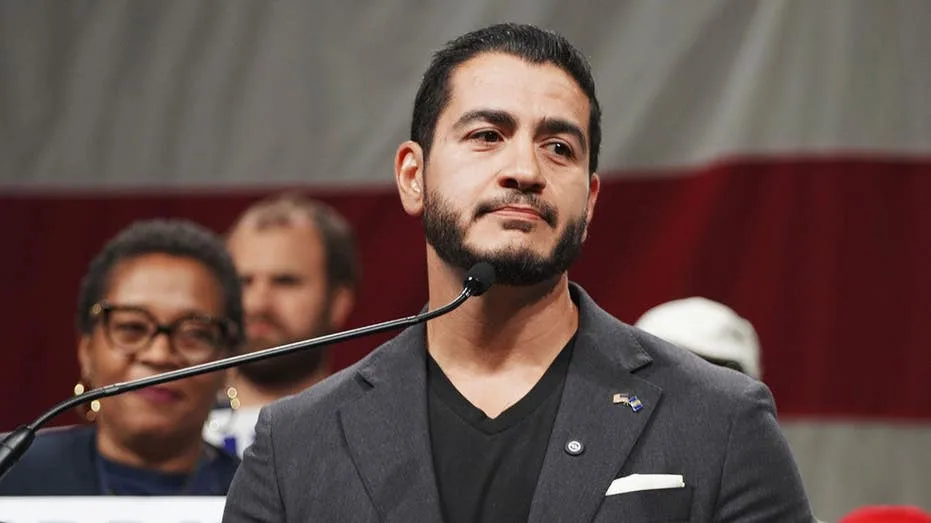
Former Obama administration officials who host the "Pod Save America" podcast recently engaged in a discussion regarding Michigan Senate candidate Abdul El-Sayed's response to inquiries about his family's alleged connections to the Muslim Brotherhood. While some co-hosts acknowledged the potentially "bigoted" nature of such questions, Jon Favreau cautioned El-Sayed to consider that his responses are heard not only by the questioner but also by a broader electorate who may hold genuine concerns about the organization.
Background of the Allegations
Concerns surrounding purported links between El-Sayed's family and the Muslim Brotherhood originated after reports highlighted social media posts. These posts, made by El-Sayed's half-sister, Eman Abdelhadi, detailed her family's historical association with the organization, including their mother.
At a town hall event on October 17, El-Sayed reacted sharply when an audience member asked if he would disavow the Muslim Brotherhood. After stating his disavowal of the group, El-Sayed turned the focus back to the questioner.
"You’re asking the question because implicitly, you assume that I’ll have dual loyalties, right? You assume that I wouldn’t disavow, or that I'll have some higher order allegiance than to the Constitution, correct? Tommy, is that what you imply?" he stated.
Podcast Hosts Weigh In
Favreau criticized efforts by Republicans to link El-Sayed to the organization through his family, asserting that the strategy was designed to sway voters.
"It's somewhat smarter for them to throw out the Muslim Brotherhood thing because it's like, 'This is a new piece of information that people might have no idea what the Muslim Brotherhood is,'" he explained, describing the likely tactical approach. "'Sounds pretty scary, doesn't it?' 'Terrorist organization.' 'Maybe you don't know the history of the Muslim Brotherhood.' 'Maybe it's got foreign ties to Egypt and he, you know, his family, his family's from Egypt.'"
Favreau elaborated on the need for candidates to look beyond the immediate interaction.
"So, to respond to that, as bulls— as it is, and of course, he like knocked it down. But you've got to forget about the a—— asking you the question," Favreau continued. "You've got to give the answer as if someone who might have a question about a Muslim Brotherhood tie is not necessarily like totally Islamophobic and like that kid or like Trump or like Mike Rogers, but like might have a question, and you don't want — and you don't want to condescend to that person or be like, ‘No, you're an a—— for asking.’ Right?"
He clarified, "And I'm not saying he did," but suggested, "I thought he could have used like 20% less condescension in the answer." Co-host Tommy Vietor concurred that El-Sayed's delivery could have been refined, adding, "There’s a slightly more empathetic version of that." Another co-host, Jon Lovett, advised candidates to "Stop fighting with that guy and speak to the people that are not."
Navigating Public Scrutiny
Favreau drew on his experience working for former President Barack Obama, emphasizing that regardless of the fairness of how a candidate's statements are characterized, public officials must carefully manage their rhetoric and tone when engaging with voters.
"You can say this from the cheap seats because I am sure when you are Abdul, and you're going around doing this and there are people who are f—— just calling into question your loyalty to your country that you love, it must f—— infuriate you," Favreau acknowledged. "And it's not fair that what he has to do in response is to eat s— and just give a nice answer with a smile."
He added:
"But like we were there when Barack Obama had to do it, and you know Zohran Mamdani had to do it and like, unfortunately, there's a double standard, and it's unfair, but you still have to do it to win an election anyway and it f—— sucks."
Campaign Performance Observations
Jesse Arm, vice president of external affairs at the Manhattan Institute and a former pollster who has closely observed the Michigan Senate race, proposed that El-Sayed's confrontational approach might be a significant factor in his performance. Arm noted that El-Sayed appears to be lagging behind his Republican opponent more significantly than the state's Democratic gubernatorial nominee is performing in her respective race.
"And if even his most sympathetic defenders can see it, imagine how he comes across to ordinary Michigan voters," Arm stated. "This is a big part of the reason he’s poised to dramatically underperform the state’s Democratic gubernatorial nominee."
Related Stories
Americans Who Relocated to Europe Post-Trump Election Express Regret Over Leaving U.S.
Many Americans who sought a new life in European countries after the 2016 election are now expressing regret, finding that the realities of living abroad differ significantly from their expectations, citing economic and
Oct 21
Senator Elissa Slotkin Labels Backlash to Prosecution Deterrence Comments as 'Manufactured Outrage'
Senator Elissa Slotkin, a Michigan Democrat, has dismissed criticism regarding her recent statements on prosecuting individuals who enable certain administrations, calling it 'manufactured outrage.' She clarified her
Oct 20
Jerry Seinfeld Challenges Anti-Israel Protesters During Chicago Stand-Up Set
During a recent performance in Chicago, comedian Jerry Seinfeld engaged with anti-Israel protesters who disrupted his show. He responded with sarcasm as security escorted them out, marking another instance of activists
Oct 17
Musician Kid Rock Recounts White House Dinner with Trump, Bill Maher, and Stephen A. Smith
Recording artist Kid Rock recently shared details about a notable dinner at the White House involving former President Donald Trump, comedian Bill Maher, and sports analyst Stephen A. Smith. The discussion touched on
Oct 17