Cyberattacks on Food Supply Chains Pose 'Psychological Warfare' Threat, Former FBI Agent Cautions
A former FBI special agent highlights the potential for sophisticated digital assaults to disrupt essential services, raising concerns about national security and public resilience.
U.S.·
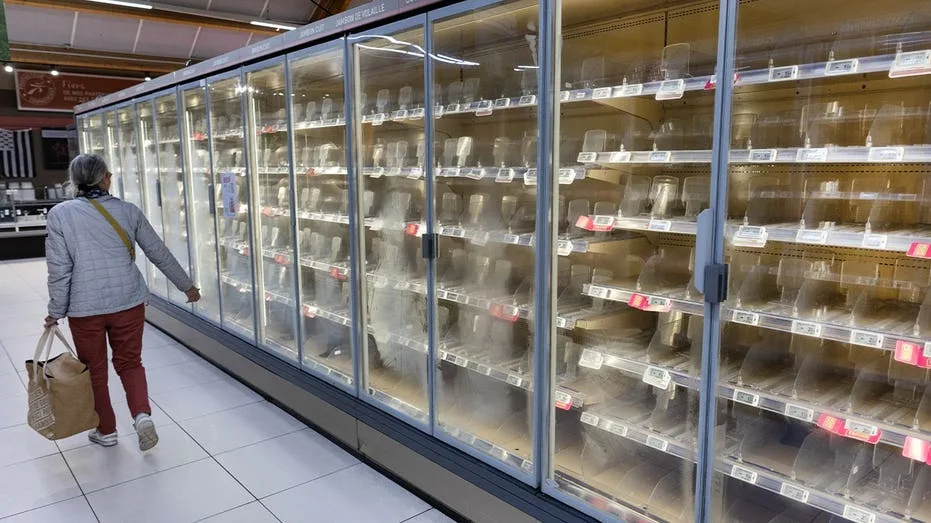
Nicole Parker, a former FBI Special Agent, has issued a caution that future assaults on American stability could manifest through disruptions to grocery supply chains. This warning comes as suspected digital intrusions have reportedly increased freezer temperatures in European supermarkets, sparking fears that daily necessities could be weaponized in "psychological warfare." Parker emphasized that cyberattacks targeting critical infrastructure for food and other essential goods could readily extend to the United States.
European Incidents and U.S. Military Base Outages
Authorities are collaborating with French law enforcement to investigate potential connections between U.S. refrigeration system failures and recent outages in Europe. While a cyberattack has not been confirmed as the root cause of malfunctions at military commissaries in the U.S., at least six such facilities, which provide groceries to service members, encountered refrigeration issues in late August.
"ALL frozen food has spoiled," announced Fort Huachuca in Arizona via a Facebook post on August 26, reflecting the severity of the situation. Other U.S. military installations impacted included F.E. Warren Air Force Base in Wyoming, Naval Station Newport in Rhode Island, Columbus Air Force Base in Mississippi, and both Travis Air Force Base and Fort Irwin in California. Following its malfunction, Fort Irwin restricted commissary sales exclusively to dry goods.
In at least one documented instance, refrigeration units were reportedly adjusted to elevated temperatures overnight, rather than merely powering down, according to reports.
Concurrently, refrigeration systems in various European supermarkets experienced disruptions recently, compelling several retailers to dispose of perishable goods. Affected establishments, as reported, encompassed stores in Sweden, Belgium, and Luxembourg, where internal system temperatures reportedly soared to 122 degrees Fahrenheit.
Parker highlighted these incidents as evidence of a threat she has frequently discussed with her former FBI colleagues: cyberattacks aimed at critical infrastructure. She stated, "What we're seeing right now is in Europe and other places, but it can very well happen on our soil."
The Threat of Asymmetrical Warfare
She characterized this threat as "asymmetrical warfare," a method allowing an adversary to destabilize daily life without deploying missiles or military forces. Parker affirmed, "No one in law enforcement underestimates the harm that could be caused by a cyberattack against our country or against our allies."
The entities responsible for the European incidents remain unidentified, as reported recently. Parker advised against prematurely attributing blame, reiterating, "Again, we don't know who did this."
Parker believes the potential ramifications extend beyond mere food spoilage. Attacking a fundamental necessity can profoundly undermine public confidence and security. She asserted, "This asymmetrical warfare has a very strong psychological impact, but we're Americans. We will not falter ever."
Beyond Law Enforcement: A Call for Broader Preparedness
Parker argued that the necessary response must involve more than just investigators pursuing cybercriminals. She stressed that elected officials and local administrators, who are vital for maintaining community operations, require training and contingency plans to assist residents should essential services be compromised. "We're in a place now where it's not just enough for law enforcement to be prepared," she stated. According to Parker, city managers, mayors, and city council members must grasp these potential threats and formulate strategies for safeguarding their communities, emphasizing proactive identification of vulnerabilities to prevent attacks.
Parker also advised families to maintain essential supplies and develop a preparedness strategy for potential cyberattack-induced disruptions to vital services. "I think if you are prepared, you do not have to fear," she remarked. She encouraged individuals to stock food, water, and necessary medications, consolidate important documents, and discuss communication plans for power outages. A battery-operated AM radio was also suggested. Parker clarified, "I'm not saying that, you know, you need to go buy everything off of the shelves." Rather, she advocated for integrating practical readiness into daily routines.
For Parker, a Florida resident, this preparedness philosophy is well-understood. She likened it to hurricane readiness, stating, "We're used to hurricanes. The preparation would be very much the same."
Related Stories
New Jersey Pre-K Aide Faces 61 Charges in Child Sexual Assault Investigation
A former pre-kindergarten aide in New Jersey has been indicted on 61 criminal charges, including aggravated sexual assault and child pornography manufacturing, after investigators found disturbing images and videos of
Nov 5
Washington Deputy Dies, Another on Life Support After Ambush During Domestic Incident; Four Fatalities Reported
A domestic violence response in Spokane County, Washington, turned fatal when deputies were ambushed. One sheriff's deputy died, another is on life support, and four people, including the suspect, were found dead at the
Nov 4
Former West Point Cadet Sued for Allegedly Drugging Pregnant Girlfriend with Abortion Medication
A former West Point cadet, Caleb T. Suh, faces a civil lawsuit from his ex-girlfriend, "Jane Doe," for assault and battery. The suit stems from a 2022 incident where Suh admitted to secretly administering abortion
Nov 3
Missing Utah Teenager Kylie Arellano Found Safe in Oregon After 500-Day Search
Kylie Arellano, a Utah teenager missing for over 500 days, has been found safe in Oregon. The 17-year-old disappeared from her Garden City home in May 2025. A 39-year-old man was taken into custody in connection with
Nov 2